
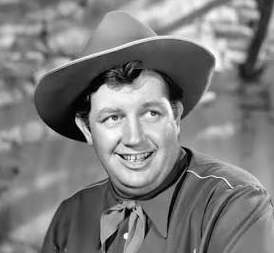
Andrew Vabre Devine was born on October 7, 1905, in Flagstaff, Arizona. When he was about one year old, his family moved to Kingman, Arizona, where they operated the town’s historic Beale Hotel. His father, Thomas Devine Jr., was a Michigan-born hotelier, and his mother, Amy (née Ward), was the granddaughter of U.S. Navy Commander James H. Ward.
Devine grew up in Kingman and attended local schools before enrolling in college. He studied at Northern Arizona State Teachers College, now Northern Arizona University, where he played football and basketball. He later attended Santa Clara University in California and continued his college football career.
One account states that Devine suffered a childhood accident at his family’s hotel in Kingman. While running with a curtain rod in his mouth, he fell and impaled the roof of his mouth. He later developed the raspy speaking voice that became his hallmark.
| Full Name | Andrew Vabre “Andy” Devine |
| Birthday | October 7, 1905 |
| Birthplace | Flagstaff, Arizona, U.S. |
| Date of Death | February 18, 1977 |
| Age at Death | 71 years |
| Nationality | American |
| Profession | Actor, voice actor, radio personality, and television host |
| Known For | Western films and his distinctive raspy voice |
| Net Worth | Not publicly disclosed or officially verified |
| Education | Northern Arizona State Teachers College and Santa Clara University |
| Years Active | 1926–1977 |
| Famous Role | Cookie Bullfincher in Roy Rogers films |
| Best-Known TV Role | Jingles P. Jones in The Adventures of Wild Bill Hickok |
| Notable Film | Stagecoach (1939) |
| Hollywood Recognition | Two stars on the Hollywood Walk of Fame for radio and television |
Breaking into Hollywood as a Character Actor
Andy Devine came to Hollywood after college, hoping to build an acting career despite his unusual voice. In the late 1920s, he worked various odd jobs, including as a lifeguard on Venice Beach, while taking bit parts in films.
His breakthrough came around 1931, when his football-built frame and high-pitched, raspy delivery earned him a supporting role in The Spirit of Notre Dame. Reflecting on the early sound era, Devine joked that studios “threw me right out into the street…with my voice they thought I’d clear the theaters.” His distinctive speech soon became his comic signature.
A friend suggested that he audition for a small role in a Western comedy, turning his perceived weakness into an advantage. Devine’s awkward accent and good-natured humor drew laughs, and he soon secured more character roles. By the mid-1930s, he was working steadily in Hollywood films and had earned a reputation as a reliable character actor, even in minor roles.
Establishing a Lasting Presence in Western Films
Devine’s distinctive voice and round build made him an ideal comic sidekick in Westerns, and he became a fixture of the genre. During the 1930s and 1940s, he appeared in hundreds of Westerns for studios such as Republic Pictures and Universal, playing roles ranging from dusty sheriffs to stagecoach drivers.
Director John Ford cast him as the talkative stagecoach driver in Stagecoach (1939). Devine moved easily between low-budget “horse operas” and major productions, a rare achievement shared only by performers such as Walter Brennan. By the late 1940s, trade polls ranked him among the top ten Western stars at the box office.
Devine observed that every cast needed “at least one heavy-set, good-natured character who delivered his lines in a high-pitched, gravel-voiced croak.” Producers continued to cast him in that persona throughout the decade.
Playing Cookie Alongside Roy Rogers
In the late 1940s, Andy Devine became best known to Western audiences as Cookie Bullfincher, the bumbling deputy and friend of Roy Rogers. Between 1947 and 1949, he played Cookie, and occasionally Cookie’s twin brother Alf, in about ten Republic Pictures features starring Rogers.
The films included Bells of San Angelo (1947), Springtime in the Sierras (1947), Under California Stars (1948), and Grand Canyon Trail (1948). In each film, Devine’s hearty humor and distinctive drawl complemented Rogers’ straight-shooting hero, making Cookie a popular comic foil.
His work in the Rogers series reinforced his image as the archetypal cowboy sidekick and made him a favorite among Western audiences of the era.
Expanding into Comedy and Supporting Film Roles
Outside Westerns, Devine worked steadily as a comic and character actor across a wide range of films. He co-starred with leading entertainers such as Jack Benny in the Western spoof Buck Benny Rides Again (1940) and played the talkative chauffeur Danny in the classic drama A Star Is Born (1937).
He often provided comic relief in more serious productions. Bandleader Jack Webb cast him as the slightly hard-boiled Detective George Tenell in the musical drama Pete Kelly’s Blues (1955), in which Devine deliberately lowered his voice for dramatic effect.
He also took colorful supporting roles in large-scale studio films. Devine played a wheezing Texas sheriff in the all-star comedy It’s a Mad, Mad, Mad, Mad World (1963) and later voiced Friar Tuck in Disney’s Robin Hood (1973).
Devine maintained his comic persona throughout his career. As he joked, other “portly” actors attempted serious roles, but with his singular voice, “I couldn’t go any other way than I did with my voice.”
Reaching Television Audiences Through The Adventures of Wild Bill Hickok
Devine reached a wider audience with the arrival of television. In 1951, he began playing Deputy Marshal “Jingles” Jones in The Adventures of Wild Bill Hickok, a weekly television Western starring Guy Madison. He had already played Jingles in the radio version, so the character was familiar to audiences.
The series ran for seven seasons and 112 episodes from 1951 to 1958, giving Devine a regular presence in American living rooms. Jingles was the jovial sidekick who often caused trouble before Wild Bill saved the day. Devine described the partnership with a grin: “I’d get everybody into trouble and Guy’d get ’em out.” The role introduced him to a new generation as a television cowboy star and strengthened his reputation as the friendly, bumbling deputy.
Hosting Andy’s Gang and Building a Children’s Television Legacy
Devine’s warm, avuncular screen presence also suited children’s television. Beginning in 1955, he hosted Andy’s Gang, a half-hour family variety show on NBC that ran until 1960. On the weekday program, he told stories, performed skits, and introduced cartoons for young viewers nationwide.
His folksy charm helped make Andy’s Gang one of early television’s first successful children’s shows. During those years, he also made guest appearances on programs including The Ford Show. In the studio and on location, Devine brought the same good humor to young audiences that had made him a screen favorite. His work in children’s entertainment extended his legacy to those who grew up watching him in the 1950s.
Final Screen Roles and His Enduring Hollywood Legacy
Devine continued working into his later years. During the 1960s, he made guest appearances on television dramas, including a 1963 episode of The Virginian in which he played a sheriff. He also appeared as Santa Claus in the camp classic television series Batman in 1966.
His later film work included roles in the Walt Disney epic How the West Was Won (1962) and the war comedy The Phynx (1970). He provided the voice of Friar Tuck in Robin Hood (1973). His final big-screen cameo was as a priest in the Hollywood satire Won Ton Ton, the Dog Who Saved Hollywood (1976).
By the time of his death in 1977, Devine had accumulated roughly 400 film and television credits. Hollywood honored his long career with two stars on the Hollywood Walk of Fame, one for radio and one for television. Fans still remember him as one of cinema’s quintessential character actors. Throughout his career, Andy Devine retained the signature gravelly voice and genial smile that became an enduring part of his legacy in American film and television.
Andrew Devine Net Worth
At the time of Andrew Devine’s death, his net worth remained private and had not been officially verified. He earned income from his work in film, television, radio, and voice acting, although specific earnings from these activities were not publicly disclosed.
FAQs
What was Andrew Devine best known for?
Andrew Vabre “Andy” Devine was best known as a character actor with a distinctive raspy voice. He frequently appeared in Western films and television productions.
How long did Andy Devine’s acting career last?
Devine’s screen career lasted more than four decades, from the silent era through the early 1970s.
Did Andy Devine appear in films with Roy Rogers?
Yes. Devine played Cookie, Roy Rogers’ sidekick, in 10 feature films released during the 1940s.
What was Andy Devine’s role in Stagecoach?
Devine played Buck, the stagecoach driver, in the 1939 Western Stagecoach. It became one of his best-known screen roles.
Did Andy Devine work in television?
Yes. He starred as Jingles P. Jones in the television series The Adventures of Wild Bill Hickok, which brought his work to a large television audience during the 1950s.