

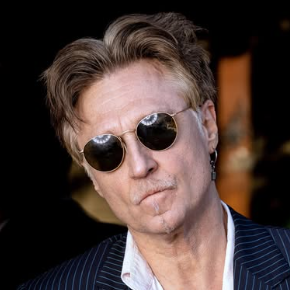
John Charles Waite was born on July 4, 1952, in Lancaster, Lancashire, England, and grew up in the Lancaster area. He described his childhood home as a modest countryside cottage featuring an outdoor toilet, fields, trees, and a large local park nearby. Waite recalled being very shy as a child. His family had little, so they made their own entertainment.
His mother played the piano, his brother Joe learned the guitar at around 11, and his cousin Michael owned a guitar. Waite also remembered listening to music from American Western television shows and discovering The Beatles at around nine. He attended Greaves Secondary Modern School and, after completing his secondary education, studied art at Lancaster’s Storey Institute, also known as Lancaster Art College.
| Detail | Information |
|---|---|
| Name | John Charles Waite |
| Birth Date | July 4, 1952 |
| Birthplace | Lancaster, Lancashire, England |
| Early Education | Greaves Secondary Modern School & Storey Institute (Lancaster Art College) |
| Early Career Band | The Babys (Bassist and lead vocalist, 1970s) |
| Breakthrough Hit | “Missing You” (Hit No. 1 on U.S. Billboard Hot 100 in 1984) |
| Supergroup | Bad English (Co-founded in 1988 with Jonathan Cain and Neal Schon) |
| Major Chart Success | “When I See You Smile” (Hit No. 1 with Bad English in 1989) |
| Solo Musical Shift | Transitioned to roots-rock, blues, and acoustic storytelling in the 1990s |
| Acoustic Projects | Wooden Heart acoustic anthology series released in the 2010s |
| Independent Label | No Brakes Records |
| Grammy Recognition | Nominated for Best Male Pop Vocal Performance for “Missing You” |
| Primary Income Sources | Songwriting/recording royalties and live concert touring |
| Live Performance History | Headlined solo tours and supported acts like Bon Jovi and Whitesnake |
| Net Worth Status | Private and unverified by major financial authorities |
Fronting Power-Pop Band The Babys in the Late 1970s
John Waite began his career in the mid-1970s as the bassist and eventual lead vocalist for the British rock band The Babys. Developing a polished power-pop sound, the group recorded five albums for Chrysalis Records. They achieved transatlantic exposure with two hit ballads, “Isn’t It Time” and “Every Time I Think of You,” which both reached the mid-teens on the U.S. charts in 1977 and 1979.
These singles kept the band touring steadily through the late 1970s. Keyboardist Jonathan Cain joined in 1978, introducing new wave influences. Following the release of their 1980 album, On the Edge, The Babys disbanded when Cain left to join Journey.
Solo Breakthrough and Chart Success with Missing You
Waite transitioned to a solo career, signing with Chrysalis/EMI to release his 1982 debut album, Ignition. The AOR-friendly single “Change” secured radio play but saw modest chart movement. In 1984, he released his second album, No Brakes, on EMI. The lead single, “Missing You,” topped the U.S. Billboard Hot 100 in the summer of 1984 and reached the UK Top 10.
Driven by the single’s popularity, No Brakes entered the U.S. Top 10 and achieved Platinum certification. “Missing You” secured Waite a prominent presence on MTV and allowed him to headline his own tours. Subsequent ballads from the album, such as “Tears” and “Every Step of the Way,” achieved lower chart positions.
Forming Arena-Rock Supergroup Bad English
In 1988, Waite formed a five-piece supergroup alongside former bandmate Jonathan Cain on keyboards, Journey guitarist Neal Schon, bassist Ricky Phillips, and drummer Deen Castronovo (the latter two also former members of The Babys).
Adopting the name Bad English, the band signed with Epic Records. Their 1989 self-titled debut album was driven to multi-Platinum sales by Diane Warren’s power ballad “When I See You Smile,” which reached No. 1 on the Billboard Hot 100 in November 1989. The band released subsequent singles, including the U.S.
Top 10 hit “Price of Love,” and toured as a supporting act with Bon Jovi and Whitesnake. Creative tensions surfaced during the production of their 1991 sophomore album, Backlash, which failed to produce any major hits. Bad English disbanded by 1992. Waite later noted that while he enjoyed playing to stadium crowds, he felt uncomfortable with the group’s corporate-rock image, prompting his departure to resume his solo work.
John Waite Returns to Solo Roots-Rock and Blues Exploration
Following the conclusion of Bad English, John Waite resumed his solo career in the mid-1990s, shifting toward a roots-oriented, singer-songwriter approach. His 1995 Imago Records release, Temple Bar, featured acoustic-driven arrangements and blues-inflected balladry. The album included covers of Van Morrison’s “Someone Like You” and Hank Williams’ “I’m So Lonesome I Could Cry.” Its single, “How Did I Get By Without You?”, earned an MTV video and reached number 89 on the U.S.
Hot 100, becoming an adult radio hit. Waite’s subsequent 1997 album for Mercury Records, When You Were Mine, maintained this personal, country-tinged direction. He stated in interviews that he was returning to those roots, stepping away from arena rock to prioritize songwriting.
He carried this introspective, folk-rock style into the next decade with Figure in a Landscape (2001) and The Hard Way (2004). In 2007, he released Downtown: Journey of a Heart through Rounder. This collection blended original singer-songwriter material with covers, including Tom Petty’s “Downtown.” These records established Waite within blues, country, and roots rock idioms.
Stripped-Down Acoustic Releases and the Wooden Heart Series
During the 2010s, Waite reimagined his catalog through minimalist, acoustic projects. He released the Wooden Heart (Acoustic, Vol. 1) EP in 2014 via No Brakes Records, featuring solo acoustic versions of early songs like “The One Who Got Away” and “Magic Camera.” He issued a full-length follow-up in 2017. The Wooden Heart Acoustic Anthology, Vol. 2 compiled unplugged reinterpretations of fan favorites and hits, including acoustic guitar renditions of “Isn’t It Time” and “Missing You.”
Concurrently, Waite released career retrospectives. His 2014 digital anthology Best, also on No Brakes Records, combined later ballads with re-recorded versions of Babys-era classics such as “Back on My Feet Again” and “Isn’t It Time.” The compilations and the Wooden Heart series demonstrated Waite’s control over his catalog and his preference for revisiting material in a raw, roots-oriented format.
John Waite Expands Live Albums and Career Retrospectives
Alongside his studio work, Waite maintained an active release schedule of live recordings and retrospectives. His 2001 concert album, Live & Rare Tracks, captured performances of both his solo and Babys material. He released the acoustic concert recording In Real Time in 2010, followed by the full-band live set Live All Access in 2013, providing documentation of his stage shows.
Waite’s catalog expanded with several anthologies. Collections like The Essential John Waite (1992) and Complete (1996) gathered hits from his bands and solo efforts, while the 2014 Best compilation updated his legacy with fresh recordings.
Waite has remained active in the studio and on the road. In 2022, he issued Anything, a digital EP of new material on No Brakes Records, and he continues to perform concerts worldwide. Through live albums, reissues, and greatest-hits collections, Waite refreshes interest in his work, maintaining his standing as a rock vocalist.
John Waite Net Worth
As of 2026, John Waite’s net worth remains private and unverified by major financial authorities. His income is generated through music industry activities such as songwriting and recording royalties and live performances.
Waite himself has indicated that he earned royalties from radio airplay of his hits and from album sales in earlier years, but that streaming services now pay minimal royalties. Consequently, he relies heavily on touring, and he sells albums and branded merchandise (signed CDs, T-shirts, etc.) at concerts. Specific earning figures have not been publicly disclosed.
FAQs
What major industry awards has John Waite received recognition for?
John Waite received a Grammy Award nomination for Best Male Pop Vocal Performance for his 1984 single “Missing You”.
How many solo studio albums has John Waite released throughout his career?
John Waite has released ten solo studio albums, beginning with his 1982 debut Ignition.
Did John Waite write his own hit songs or collaborate with external songwriters?
John Waite co-wrote many of his solo and band tracks, while hits like Bad English’s “When I See You Smile” were written by external songwriters such as Diane Warren.
What musical instrument did John Waite initially play when fronting The Babys?
John Waite played bass and served as the lead vocalist for The Babys.
Which notable touring lineups or supergroups has John Waite performed with outside of his solo career?
John Waite fronted The Babys and co-founded the supergroup Bad English with members of Journey.